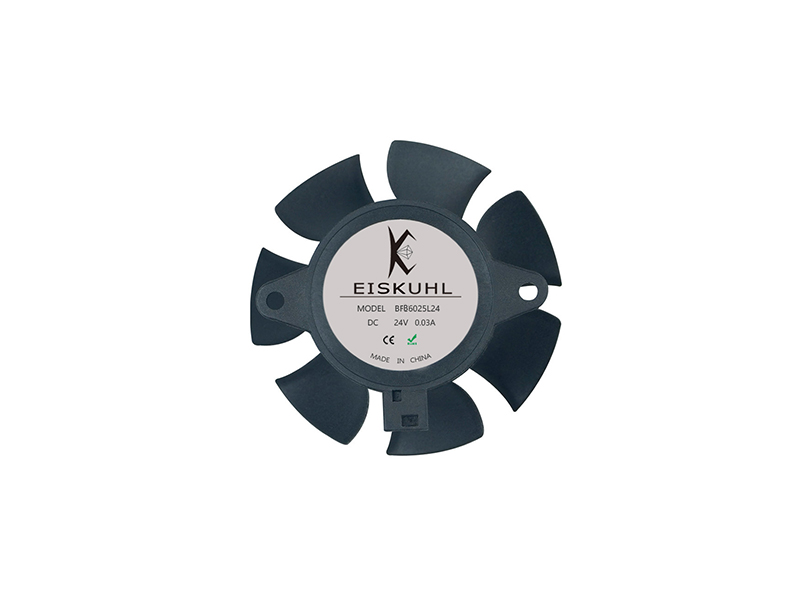
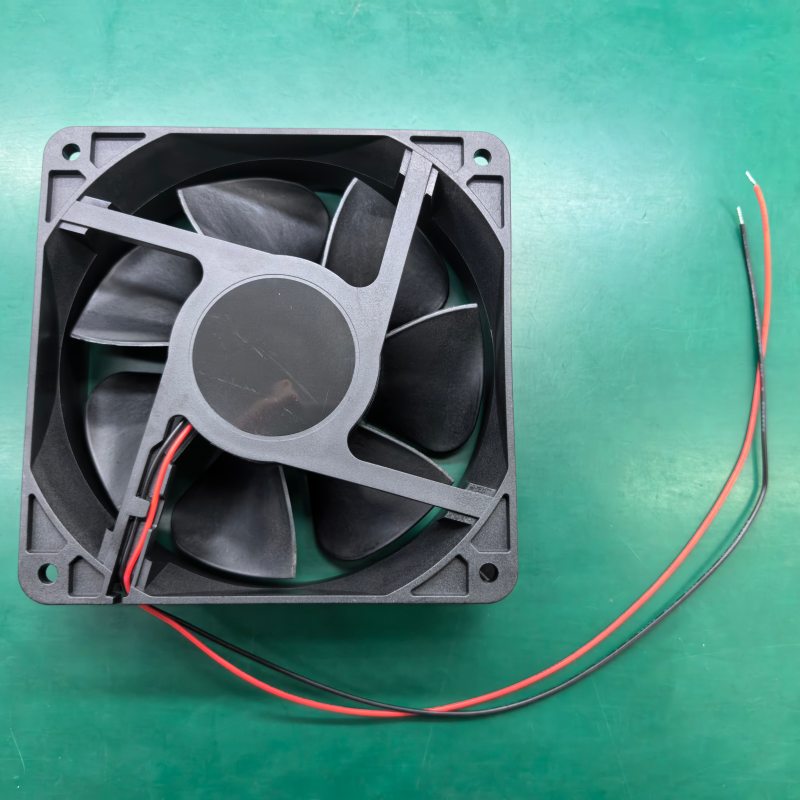
In this guide, we compare 5V vs. 12V mini DC fans and explain how to choose the right cooling fan for your equipment.
This guide explains the key factors to consider when selecting a mini DC axial fan for your application.
Explore the advantages and disadvantages of DC axial fans, including efficiency, noise, static pressure, voltage, applications, and selection tips.
Learn how to run multiple 12V DC fans from one battery, including parallel wiring, current calculation, battery runtime, safety, and fan selection.
Among the various cooling solutions available, DC axial fans are widely used because they offer a practical combination of airflow performance, compact size, low power consumption, controllability, and reliability.
This guide compares 12V, 24V, and 48V DC axial fans to help you determine which voltage is best suited for your cooling requirements.
Both DC axial fans and DC centrifugal fans play important roles in modern cooling systems. DC axial fans are ideal for applications requiring high airflow, simple ventilation, and cost-effective cooling. DC centrifugal fans are better suited for systems requiring high static pressure, compact installation, and stable airflow through resistance.
Among all fan technologies, the centrifugal fan remains one of the most widely used due to its ability to generate relatively high static pressure and stable airflow performance. Which type of centrifugal fan is the most efficient? To answer this, we must understand how centrifugal fans work, the different types available, and how efficiency is measured in real-world applications.
This article provides a comprehensive guide to understanding CE and RoHS certifications, their relevance to frameless blower fans and axial designs, and how to ensure your products meet global compliance requirements.
Understanding the differences between AC cooling fans and DC axial fans is essential for selecting the right solution for your application. This article provides a detailed comparison of both types, including performance, efficiency, noise, and practical selection guidance.
Engineers are increasingly turning to frameless cooling fan solutions. These innovative designs offer superior flexibility, compactness, and airflow efficiency, making them ideal for modern PCB cooling applications.
This article explores the top five applications for DC frameless fans in modern electronics, along with the technical advantages that make them indispensable in high-performance environments.
Contact Us